Micro- and Nanorobots in Cancer Therapy: From Active Drug Delivery to Clinical Translation
- French Academy of Pharmacy. 4, ave de l’Observatoire Paris, France
Published on
Abstract
Micro- and nanorobotic systems represent an emerging approach to overcoming some of the limitations of conventional anticancer drug delivery. Unlike passive nanocarriers, these systems can exploit externally controlled or autonomous propulsion mechanisms to navigate through biological environments, transport therapeutic agents, and potentially improve their distribution within tumour tissues. Various platforms have been investigated, including magnetically actuated microrobots, chemically propelled Janus particles, acoustically responsive systems, and biohybrid devices incorporating bacteria, sperm cells, or microalgae. Recent preclinical investigations have demonstrated the feasibility of delivering therapeutic agents to poorly accessible anatomical compartments, including hypoxic tumour regions and pulmonary metastases. However, substantial challenges remain regarding physiological navigation, drug-loading capacity, pharmacokinetics, biodistribution, biocompatibility, pharmaceutical stability, manufacturing reproducibility, and regulatory evaluation. Importantly, the demonstration of successful propulsion or increased tumour accumulation does not necessarily establish therapeutic efficacy. This review critically examines the technological principles and experimental applications of micro- and nanorobots in oncology, with particular emphasis on pharmaceutical performance and the challenges associated with clinical translation.
1.Introduction
Despite major advances in oncology, the selective delivery of therapeutic agents to malignant tissues remains a considerable challenge. Conventional chemotherapy is frequently associated with dose-limiting toxicities because systemic administration exposes healthy tissues to pharmacologically active drug concentrations. Although nanomedicine has introduced innovative delivery systems, including liposomes and polymeric nanoparticles, the accumulation of these carriers within solid tumours remains limited and heterogeneous.
A meta-analysis based on physiologically based pharmacokinetic modelling of 376 datasets reported a median tumour delivery efficiency of only 0.76% of the injected nanoparticle dose at the last sampling time point [1]. However, this value should not be regarded as a universal characteristic of all nanomedicines, since delivery efficiency depends on particle characteristics, tumour models, administration conditions, and sampling times.
Furthermore, the relationship between nanoparticle dose and tumour accumulation is not necessarily linear. Experimental investigations have demonstrated that saturation of hepatic uptake mechanisms can markedly modify nanoparticle biodistribution and increase tumour delivery [2].
These observations highlight the importance of understanding the biological mechanisms governing drug delivery rather than relying exclusively on the physicochemical properties of therapeutic carriers.
Micro- and nanorobotics introduce an alternative concept based on active movement, external guidance, or autonomous responses to the biological environment.
The potential advantage is not simply an increase in drug accumulation but the possibility of controlling the spatial and temporal distribution of therapeutic agents. However, the translation of this concept into clinical oncology requires more than technological feasibility. It requires demonstration of a reproducible pharmacological benefit under physiologically relevant conditions.
2. Design and propulsion mechanisms
Micro- and nanorobots are miniature engineered systems designed to perform controlled movements or specific functions at microscopic dimensions.
Although the terms microrobot and nanorobot are frequently used together, they do not necessarily refer to identical technologies. Microrobots generally operate at micrometre dimensions, whereas nanorobotic systems involve nanoscale structures or components. Furthermore, not all nanoparticles exhibiting stimulus-responsive behaviour should be classified as robots.
A useful distinction can be made between passive nanocarriers, actively propelled particles, externally guided microrobots, and autonomous or semi-autonomous biohybrid systems.
The design of a therapeutic microrobot requires the integration of several functions (Fig. 1):
A propulsion mechanism capable of generating movement.
A navigation or targeting system.
A therapeutic payload and suitable loading strategy.
A controlled drug-release mechanism.
Materials compatible with biological environments.
A safe mechanism for degradation, elimination, or retrieval.
Fig. 1. Schematic representation of a therapeutic microrobot.
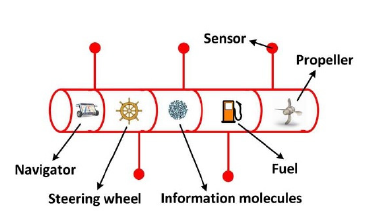
Integrating these functions within a single miniature structure is a considerable engineering challenge. Improvements in one characteristic may compromise another. For example, increasing the amount of magnetic material may facilitate navigation but reduce the available volume for drug loading. Similarly, improving structural rigidity may enhance mechanical performance while reducing biodegradability. Consequently, the optimal microrobot is unlikely to be a universal device. Its design will depend on the intended therapeutic application, route of administration, target tissue, and characteristics of the anticancer drug.
Micro- and nanorobotic systems may be classified according to their structural characteristics and propulsion mechanisms. Synthetic systems include helical microrobots, magnetic particles, flexible nanowires, tubular micromotors, and Janus structures. Biological and biohybrid systems exploit the motility of bacteria, sperm cells, or microalgae.
2.1. Synthetic microrobots
Synthetic microrobots are manufactured using inorganic, polymeric, metallic, or composite materials. Common structures include helical microrobots, flexible nanowires, tubular micromotors, Janus particles, and microscale capsules. Magnetic materials such as iron oxides or nickel-containing components may be incorporated to permit external actuation. Polymeric and hydrogel structures can provide compartments for drug loading or stimulus-responsive release.
The principal advantage of synthetic systems is the possibility of controlling their composition, geometry, surface properties, and functional characteristics. However, complex manufacturing processes may compromise reproducibility and scalability. Certain metallic components may also present unresolved concerns regarding long-term biocompatibility and tissue accumulation.
Magnetic actuation is particularly attractive because it permits externally controlled movement without requiring onboard chemical fuel. A significant advance was reported by Landers et al. [3], who developed an integrated platform combining electromagnetic navigation, catheter-based deployment, fluoroscopic tracking, and drug-containing dissolvable capsules. The authors demonstrated navigation in models of human vasculature and successful tracking and navigation in large-animal experiments. These findings represent an important step towards clinically compatible microrobotic systems, although therapeutic efficacy in cancer patients has not been demonstrated.
Chemical propulsion provides an alternative strategy. Janus particles, characterized by asymmetric physicochemical properties, can generate movement through surface reactions or interactions with environmental substrates. Mathesh et al. [4] investigated supramolecular nanomotors incorporating calcium carbonate that responded to acidic conditions generated by HeLa cells. The systems exhibited pH-responsive movement and were used to deliver doxorubicin to tumour cells under experimental conditions. Although these results support the feasibility of exploiting tumour-associated physicochemical gradients, their relevance to heterogeneous human tumour environments remains uncertain.
Acoustic propulsion offers another possibility because ultrasound can induce mechanical movement and, under appropriate conditions, trigger drug release. However, its application requires precise control of acoustic exposure and evaluation of potential tissue effects (5,6).
A very interesting system is Janus particles and chemically propelled micromotors. Janus particles are particularly versatile because their asymmetric structure allows different functions to be incorporated into separate regions of the particle. For example, one hemisphere may contain a magnetic or catalytically active material, while the other provides a surface for drug attachment. This architecture allows propulsion and drug-delivery functions to be partially optimized independently. Certain Janus micromotors have been designed to respond to acidic environments, raising the possibility of exploiting physicochemical characteristics associated with tumours (7). However, many demonstrations of chemically propelled particles have been conducted under experimental conditions that do not adequately reproduce the complexity of biological fluids. The ability to generate movement in a controlled laboratory medium should therefore not be interpreted as evidence that equivalent propulsion can be maintained in vivo. Further investigations are needed to establish whether chemically propelled Janus systems can achieve sufficient speed, directional control, and therapeutic drug delivery under physiologically realistic conditions.
2.2. -Biological and biohybrid microrobots
Biological propulsion exploits naturally motile cells and microorganisms, potentially combining movement with environmental sensing.
One of the pioneering approaches was reported by Felfoul et al. [8], who used magneto-aerotactic bacteria associated with SN–38-containing liposomes to target hypoxic tumour regions. The combination of magnetic guidance and bacterial responses to oxygen gradients allowed preferential localization of the therapeutic carriers within poorly oxygenated tumour regions. This approach is particularly relevant because hypoxia is associated with resistance to several anticancer treatments. However, bacterial localization does not necessarily establish sufficient drug release or therapeutic efficacy, and microbial safety remains a major consideration (9)
Sperm-driven microrobots provide another example of biological propulsion. Xu et al. [10] developed sperm-hybrid micromotors capable of transporting doxorubicin towards tumour cells in experimental models.
These systems combine biological movement with engineered magnetic guidance structures. Their potential applications are particularly relevant to localized treatment within the female reproductive tract. Nevertheless, their anatomical specificity, biological variability, and manufacturing requirements restrict their immediate clinical applicability.
More recently, Zhang et al. [11] developed microalgae-based biohybrid microrobots incorporating doxorubicin-loaded nanoparticles for localized treatment of pulmonary metastases. Following intratracheal administration in mice, these systems demonstrated improved pulmonary drug distribution and significant antitumour activity. Unlike many earlier studies focused mainly on propulsion and navigation, this investigation included therapeutic outcomes, making it particularly relevant to the development of microrobotic cancer treatments. However, the results remain preclinical, and their extrapolation to human pulmonary metastases requires additional investigation.
Each propulsion mechanism exhibits advantages but also limitations, as presented in table 1.
Table 1. Main advantages and limitations of different propulsion mechanisms investigated for biomedical microrobots
Mechanism | Main advantages | Principal limitations |
|---|---|---|
Magnetic | External guidance, tissue penetration, no onboard chemical fuel | Complex control systems, limited force at depth |
Acoustic | Tissue penetration, potential combination with drug release | Dependence on acoustic conditions, possible tissue effects |
Optical | High spatial precision | Limited deep-tissue penetration |
Chemical | Potential autonomous propulsion | Fuel availability, reaction-product toxicity |
Biological | Natural motility and environmental sensing | Biological variability, immunogenicity, safety |
Biohybrid | Combines biological and engineered functions | Manufacturing and regulatory complexity |
3.Drug loading, release and pharmaceutical performance
The pharmaceutical performance of therapeutic microrobots is a central determinant of their potential clinical usefulness. Drug incorporation may involve adsorption, covalent attachment, encapsulation within polymeric matrices, or association with lipid-based nanoparticles. These strategies differ in loading capacity, stability, release kinetics, and potential interactions with the propulsion system. The incorporation of therapeutic agents must not compromise microrobot movement, while the mechanical or chemical conditions required for propulsion must not adversely affect drug stability.
Controlled release may be triggered by pH changes, temperature, ultrasound, magnetic stimulation, light, or enzymatic degradation. Nevertheless, stimulus responsiveness does not necessarily guarantee tumour selectivity. The heterogeneity of the tumour microenvironment and the existence of similar physicochemical conditions in non-malignant tissues must be considered. A particularly important issue is the distinction between carrier localization and pharmacologically active drug exposure. (Tab 2).
Table 2. Representative experimental approaches to microrobotic drug delivery in oncology
Platform | Therapeutic strategy | Main experimental achievement | Principal limitation |
|---|---|---|---|
Magnetotactic bacteria | SN–38-containing liposomes | Delivery towards hypoxic tumour regions | Microbial safety and uncertain clinical efficacy |
Magnetic microrobots | Guided transport and triggered drug release | Integrated navigation and delivery | Clinical-scale control and anatomical accessibility |
Microalgae-based biohybrids | Doxorubicin nanoparticles | Reduced pulmonary metastatic burden in mice | Local administration, biological variability |
Sperm-driven microrobots | Intracellular drug transport | Motile delivery in reproductive-tract models | Restricted anatomical applications |
Janus micromotors | Drug transport using asymmetric propulsion | Controlled movement and functionalization | Physiological fuel and propulsion limitations |
The amount of drug delivered to the tumour depends on several successive processes, including microrobot distribution, payload retention, release efficiency, and subsequent drug diffusion.
Therefore, the evaluation of microrobotic systems should incorporate quantitative drug assays, pharmacokinetic studies, and measurements of intratumoural drug concentrations whenever technically feasible.
4. Pharmacokinetics and biodistribution
The pharmacokinetic behaviour of microrobotic systems is potentially more complex than that of conventional pharmaceutical formulations.
At least three entities must be considered: the intact drug-loaded microrobot, the released active drug, and the degradation products of the carrier. Each may exhibit different distribution and elimination characteristics.The quantitative analysis of nanoparticle delivery performed by Cheng et al. [1] and the experimental findings on dose-dependent tumour accumulation reported by Ouyang et al. [2] demonstrate the importance of physiological clearance mechanisms. Although these studies concern conventional nanoparticles rather than actively propelled microrobots, they provide an essential framework for evaluating the pharmacological relevance of active drug delivery (12).
The central question is whether microrobotic propulsion can produce a measurable improvement in local drug exposure and therapeutic efficacy compared with conventional delivery systems. This question requires direct experimental comparisons rather than extrapolation from microrobot navigation performance alone.
5. Pharmaceutical stability and quality control
Therapeutic microrobots should be considered complex pharmaceutical systems rather than merely miniature mechanical devices. Their quality assessment must therefore integrate chemical, physical, biological, and functional characteristics. Drug stability must be demonstrated during manufacturing, storage, administration, navigation, and release (13)
For biological therapeutic agents, including proteins and antibodies, additional risks may arise from adsorption, aggregation, conformational modification, or interactions with metallic and polymeric surfaces. Furthermore, the preservation of propulsion performance is an essential quality attribute. A microrobot retaining its drug content but losing its capacity for controlled movement may no longer fulfil its intended therapeutic function.
Conversely, a microrobot exhibiting satisfactory propulsion but premature drug release may be pharmaceutically unacceptable. These considerations suggest that the development of microrobotic medicines will require new combinations of stability-indicating analytical methods and functional performance assays.
6. Clinical translation
The development of clinically useful microrobotic treatments will require rigorous demonstration of safety, pharmaceutical quality, and therapeutic benefit.
Although recent studies have substantially advanced navigation and drug-delivery technologies, the majority of anticancer microrobotic systems remain experimental. The integrated magnetic platform described by Landers et al. [3] illustrates progress towards clinically relevant navigation systems, while the microalgae-based approach reported by Zhang et al. [11] demonstrates the possibility of achieving measurable antitumour effects in animal models. Nevertheless, neither result establishes the clinical efficacy of microrobotic cancer therapy in humans. Initial applications may be more realistic in accessible anatomical compartments, where local administration such as bladder or bronchi (14–16). and external control can reduce the complexity of systemic navigation
The selection of appropriate clinical indications should therefore be guided by anatomical feasibility, unmet therapeutic needs, and the possibility of demonstrating clear advantages over existing treatments.
7.Conclusion
Micro- and nanorobotics introduce a new dimension to targeted anticancer drug delivery by combining therapeutic transport with active movement, environmental responsiveness, and potentially controlled release. Experimental investigations have demonstrated substantial progress in magnetic navigation, biological propulsion, and localized drug delivery. However, the transition from technological feasibility to clinical usefulness remains challenging (17)
Future research must establish not only that microrobots can reach selected anatomical targets, but also that they can deliver reproducible, pharmacologically effective drug doses while maintaining an acceptable safety profile (18).
The ultimate success of therapeutic microrobotics will therefore depend less on increasing the complexity of miniature machines than on demonstrating meaningful improvements in the therapeutic index of anticancer agents.
Use of IA
During the preparation of this work the author used ChatGPTPro in order to revise quality of English language. After using this tool/service, the author reviewed and edited the content as needed and takes full responsibility for the content of the published article
Article information
- Year
- 2026
- Volume
- 1
- Issue
- 1
The author declares no competiting interest related to this work
The author declares he received no funding for this work
The sole author is responsible for the conception and redaction of the manuscript
References
1. Cheng YH, He C, Riviere JE, Monteiro-Riviere NA, Lin Z. Meta-analysis of nanoparticle delivery to tumors using a physiologically based pharmacokinetic modeling and simulation approach. ACS Nano. 2020;14(3):3075–3095. doi: 10.1021/acsnano.9b08142.
2. Ouyang B, Poon W, Zhang YN, Lin ZP, Kingston BR, Tavares AJ, et al. The dose threshold for nanoparticle tumour delivery. Nat Mater. 2020;19:1362–1371. doi: 10.1038/s41563-020-0755-z.
3. Landers FC, Hertle L, Pustovalov V, et al. Clinically ready magnetic microrobots for targeted therapies. Science. 2025;390(6774):710–715. doi: 10.1126/science.adx1708.
4. Mathesh M, Sun J, van der Sandt F, Wilson DA. Supramolecular nanomotors with "pH taxis" for active drug delivery in the tumor microenvironment. Nanoscale. 2020;12(44):22495–22501. doi: 10.1039/D0NR04415F.
5. Del Campo Fonseca A, Ahmed D. Ultrasound robotics for precision therapy. Adv Drug Deliv Rev. 2024;205:115164. DOI: 10.1016/j.addr.2023.115164.
6. Wu G, Xian W, You Q, Zhang J, Chen X, AcousticRobots: Smart acoustically powered micro-/nanoswimmers for precise biomedical applications. Adv Drug Deliv Rev. 2024; 207: 11520 DOI: 10.1016/j.addr.2024.115201.
7. Guix M, Meyer A, Koch B, Scmidt OJ. . Carbonate-based Janus micromotors moving in ultra-light acidic environment generated byHeLa cells in situ. Sci Rep 2016: 6: 21701 https://doi.org/10.1038/srep217018.
8. Felfoul O, Mohammadi M, Taherkhani S, de Lanauze D, Xu YZ, Loghin D, et al. Magneto-aerotactic bacteria deliver drug-containing nanoliposomes to tumour hypoxic regions. Nat Nanotechnol. 2016;11(11):941–947. doi: 10.1038/nnano.2016.137.
9 Taherkhani S, Mohammadi M, Daoud J, Martel S, Tabrizian M. Covalent binding of nanoliposomes to the surface of magnetotactic bacteria for the synthesis of self-propelled therapeutic agents. ACS Nano. 2014;8(5):5049–5060. DOI: 10.1021/nn5011304.
10. Xu H, Medina-Sánchez M, Magdanz V, Schwarz L, Hebenstreit F, Schmidt OG. Sperm-hybrid micromotor for targeted drug delivery. ACS Nano. 2018;12(1):327–337. doi: 10.1021/acsnano.7b06398.
11. Zhang F, Guo Z, Li Z, Luan H, Yu Y, Zhu AT, et al. Biohybrid microrobots locally and actively deliver drug-loaded nanoparticles to inhibit the progression of lung metastasis. Sci Adv. 2024;10(24):eadn6157. doi: 10.1126/sciadv.adn6157.
12. Cheng Y, He C, Riviere J, Monteiro-Riviere N, Lin Z . Meta-Analysis of Nanoparticle Delivery to Tumors Using a Physiologically Based Pharmacokinetic Modeling and Simulation Approach. ACS Nano. 2020. 10.1021/acsnano.9b08142.
13. Saad S, Kaur H, Natale G. Scalable chemical synthesis route to manufacture pH-responsive Janus CaCO₃ micromotors. Langmuir. 2020;36(42):12590–12600. DOI: 10.1021/acs.langmuir.0c02148
14. Jia J, Guangzheng W. Zhang H, Wang F, Gu X, Dorma D, et al. Magnetic-Driven Hydrogel Robots Loaded with Mitomycin for Active Therapy of Bladder Cancer. ACS Appl. Mater. Interfaces 2025; 17 (25): 36366–36376. https://doi.org/10.1021/acsami.5c03787
15. Zhang Z, Wang L, An Z, Jiang Y, Niu J, Yang L et al. Hybrid-Driven Bacillus Calmette-Guérin Carrier for Targeted Immuno-Chemo Combo Therapy in Bladder Cancer. Cyborg Bionic Sys 2026; 7: 0492. DOI: 10.34133/cbsystems.0492
16. Li Z, Guo Z, Zhang F, Sun L, Luan H, Fang Z et al. Inhalable biohybrid microrobots: a non-invasive approach for lung treatment. Nat Commun 2025; 16: 666 https://doi.org/10.1038/s41467-025-56032-4
17 Li Z, Luan H, Fang Z, Ding S, Kobrin R, fang RH et al. Microrobots for pulmonary drug delivery. Nat Rev Bioeng 2026; 4:319–335. DOI: 10.1038/s44222-025-00381-8.
18. Zhong C, Tang M, Cong Z. Active propelled micro robots in drug delivery for urologic diseases. Micromachines (Basel). 2026;17(1):24. DOI: 10.3390/mi17010024
Editors
- Clin. Asst.-Prof. Mag. DDr. Robert Terkola, aHPh